Ganjiang Road Urban Revitalization
Reconnecting Suzhou’s historic core by transforming a divisive traffic corridor into a cohesive civic spine.
00
Problem
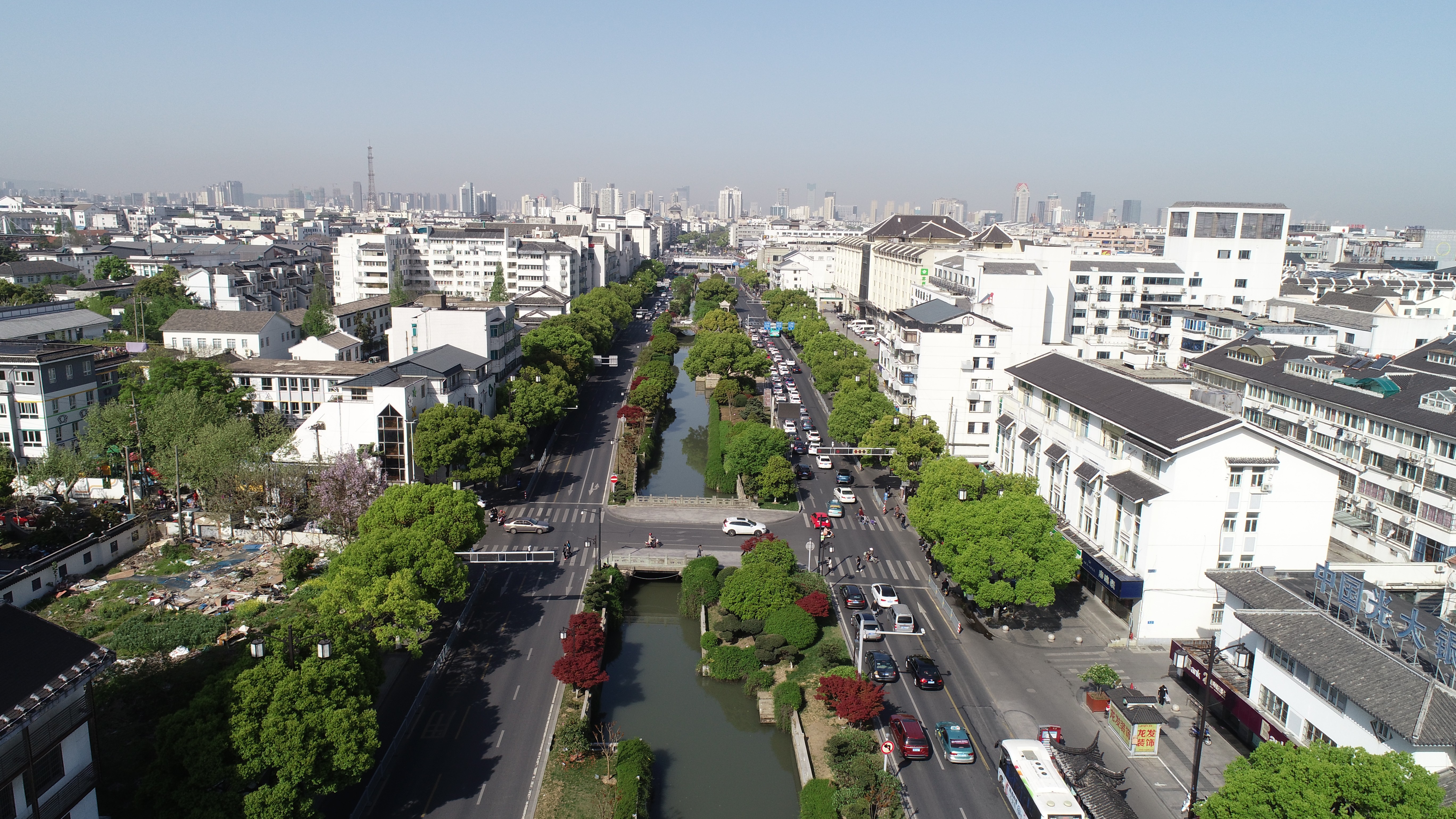
Ganjiang Road was widened to prioritize vehicular traffic, expanding into a nearly fifty meter wide corridor that split Suzhou’s historic core into two disconnected halves. Pedestrian continuity was disrupted, canal access was weakened, and street-level commercial and social life gradually declined. The road’s rigid scale conflicted with the human-centered, layered spatial character of the city, turning a former connector into a physical and perceptual barrier within the historic urban fabric.
Solution
This project reframes Ganjiang Road as a civic landscape rather than a traffic corridor. By rebalancing pedestrian and vehicular movement, strengthening canal connections, and introducing human-scale public spaces, the proposal stitches the historic city back together. The 3.2 km corridor is treated as a sequence of context-responsive urban moments, transforming infrastructure into an active and continuous civic spine.
From its conception, this project explored how large-scale infrastructure could evolve beyond efficiency-driven design. Ganjiang Road was not treated as a mistake to erase, but as an existing framework with the potential to support richer urban experiences.

The proposal positions infrastructure as a platform for connection, where movement and place-making coexist rather than compete.
This shift in perspective allowed the design to focus on incremental transformation rather than replacement. By working with the existing road structure, the project demonstrates how infrastructural systems can be adapted to support human-centered urban life without compromising their functional role.
Context Driven Strategy
The design process began with detailed site analysis, mapping pedestrian flows, vehicular movement, canal relationships, and zones of spatial fragmentation along the corridor. These studies revealed that the impacts of Ganjiang Road were not uniform; different segments interacted with the city in distinct ways. Residential neighborhoods, commercial districts, and canal intersections each presented unique challenges and opportunities.
In response, the proposal adopts a context-driven strategy. Each segment of the corridor is treated as a localized condition, allowing interventions to be tailored to surrounding land use, spatial character, and cultural significance. This approach preserves the diversity of Suzhou’s urban fabric while restoring continuity across the corridor.
Spatial Stitching
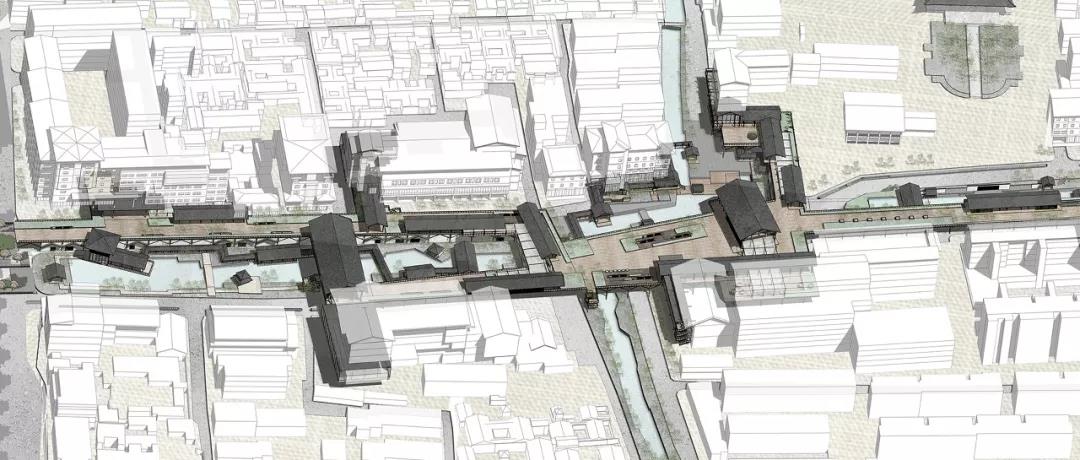
Spatial stitching is central to the project’s design logic. Pedestrian-priority crossings, multi-level circulation adjustments, and softened street edges reduce the perceptual width of the road and encourage movement across it. Framed views and carefully positioned plazas guide pedestrians between neighborhoods while reinforcing visual continuity.
Landscape elements play a critical role in mediating scale and atmosphere. Trees, planting zones, and canal-edge spaces create buffers between traffic and pedestrians, transforming the experience of the corridor from exposure to engagement. These interventions collectively shift Ganjiang Road from a linear obstacle into a sequence of walkable and legible urban spaces.
Urban Outcome
By reintroducing layered public life and strengthening connections between neighborhoods, the project transforms Ganjiang Road into an active urban interface rather than a dividing line. The redesign supports walkability, revitalizes street-level activity, and reinforces the relationship between water, movement, and public space.
Ultimately, the project demonstrates how large-scale infrastructure can be reshaped to reflect the values of contemporary urban life. Ganjiang Road becomes not only a route for movement, but a place that supports continuity, identity, and everyday interaction within Suzhou’s historic core.
01
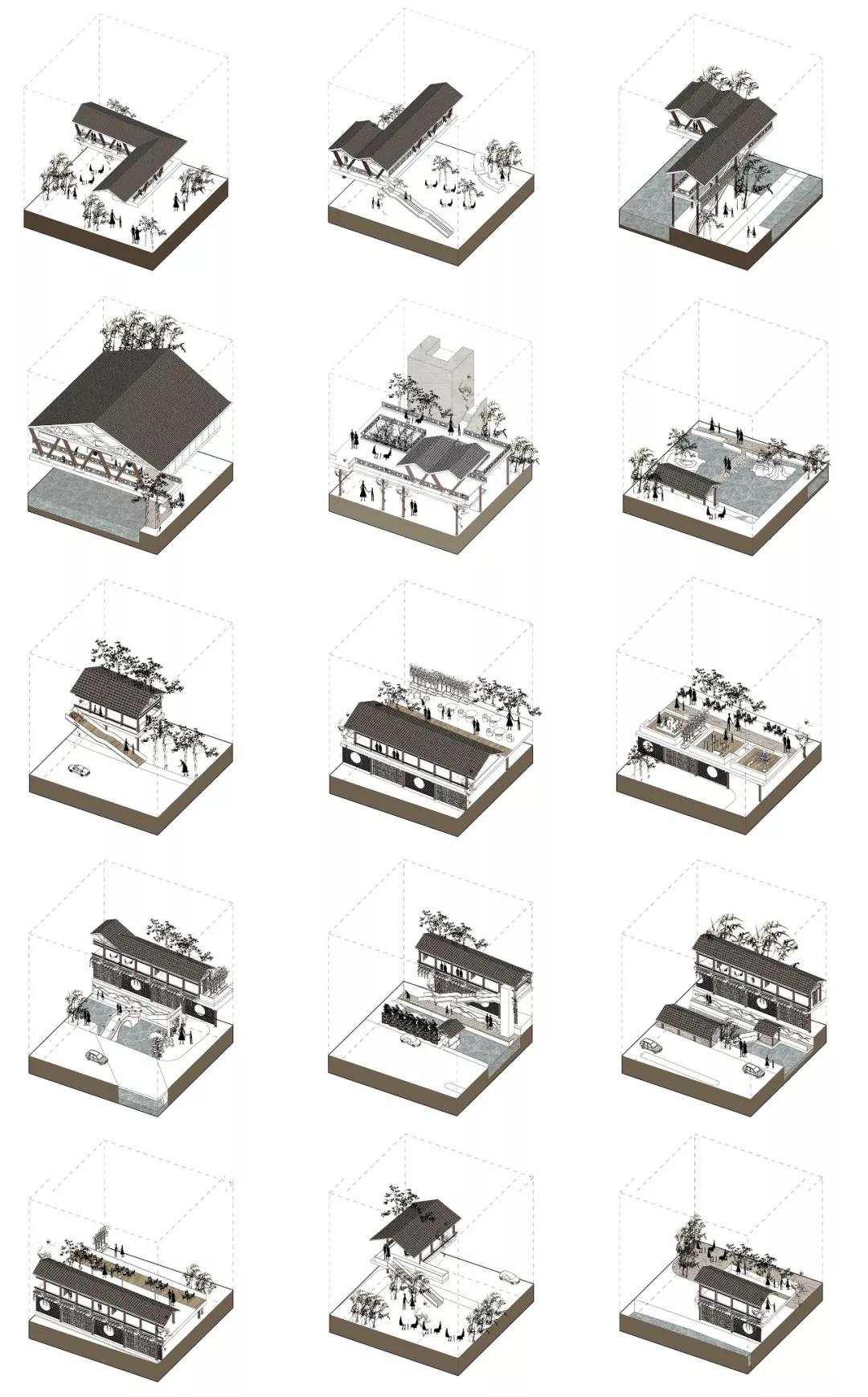
A series of modular axonometric studies exploring how a consistent structural system adapts across different spatial, programmatic, and site conditions.
02
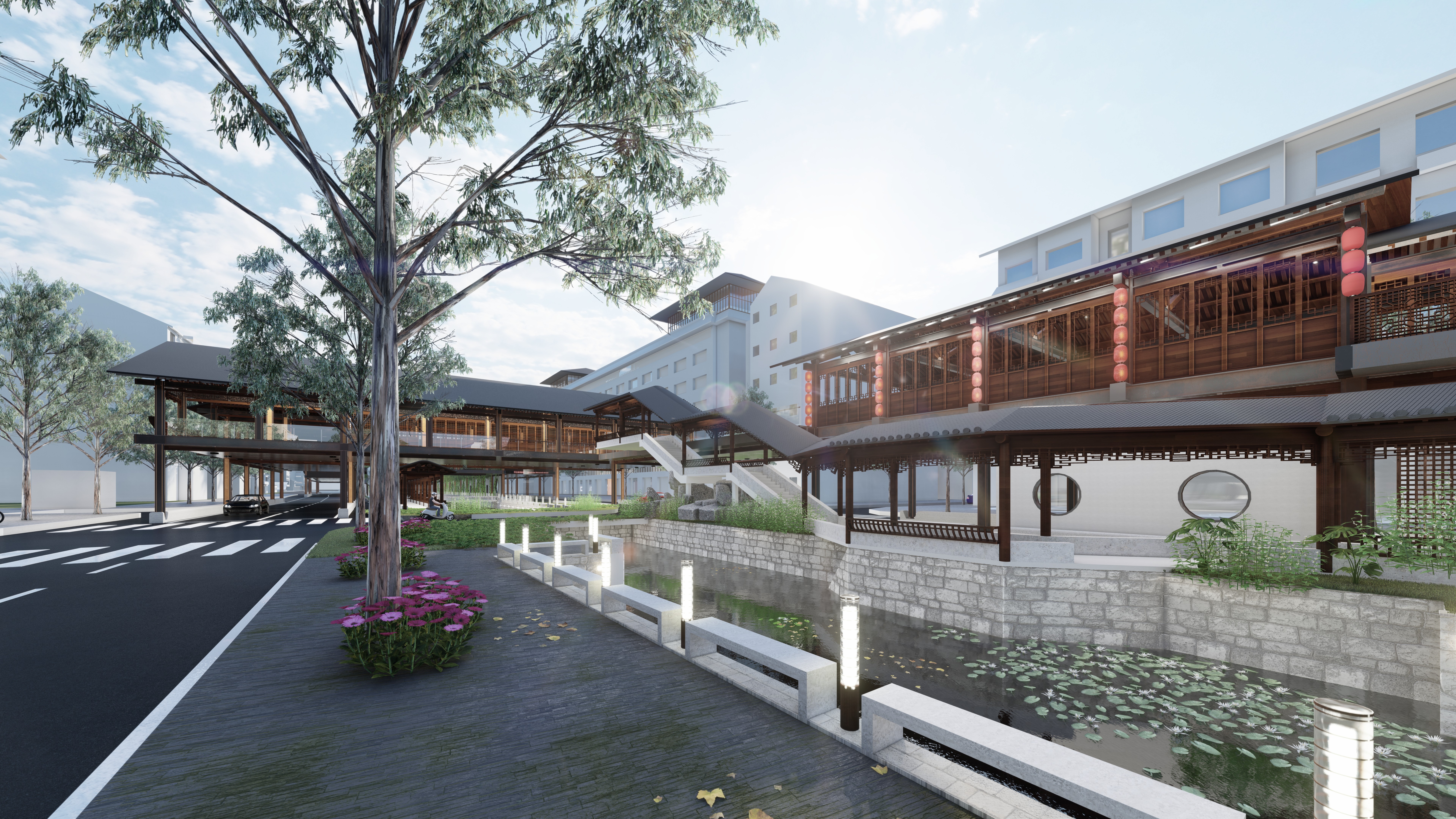
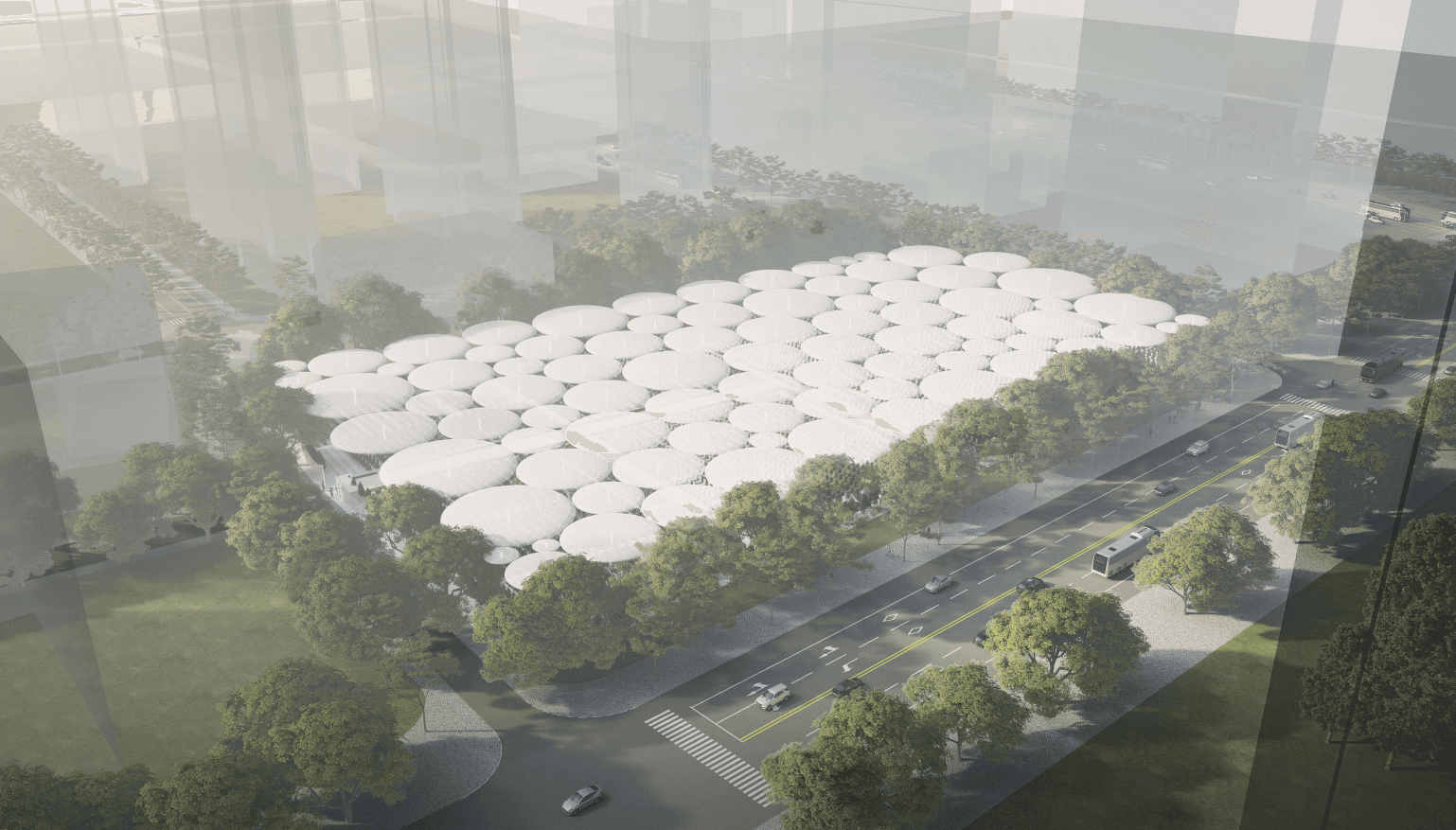
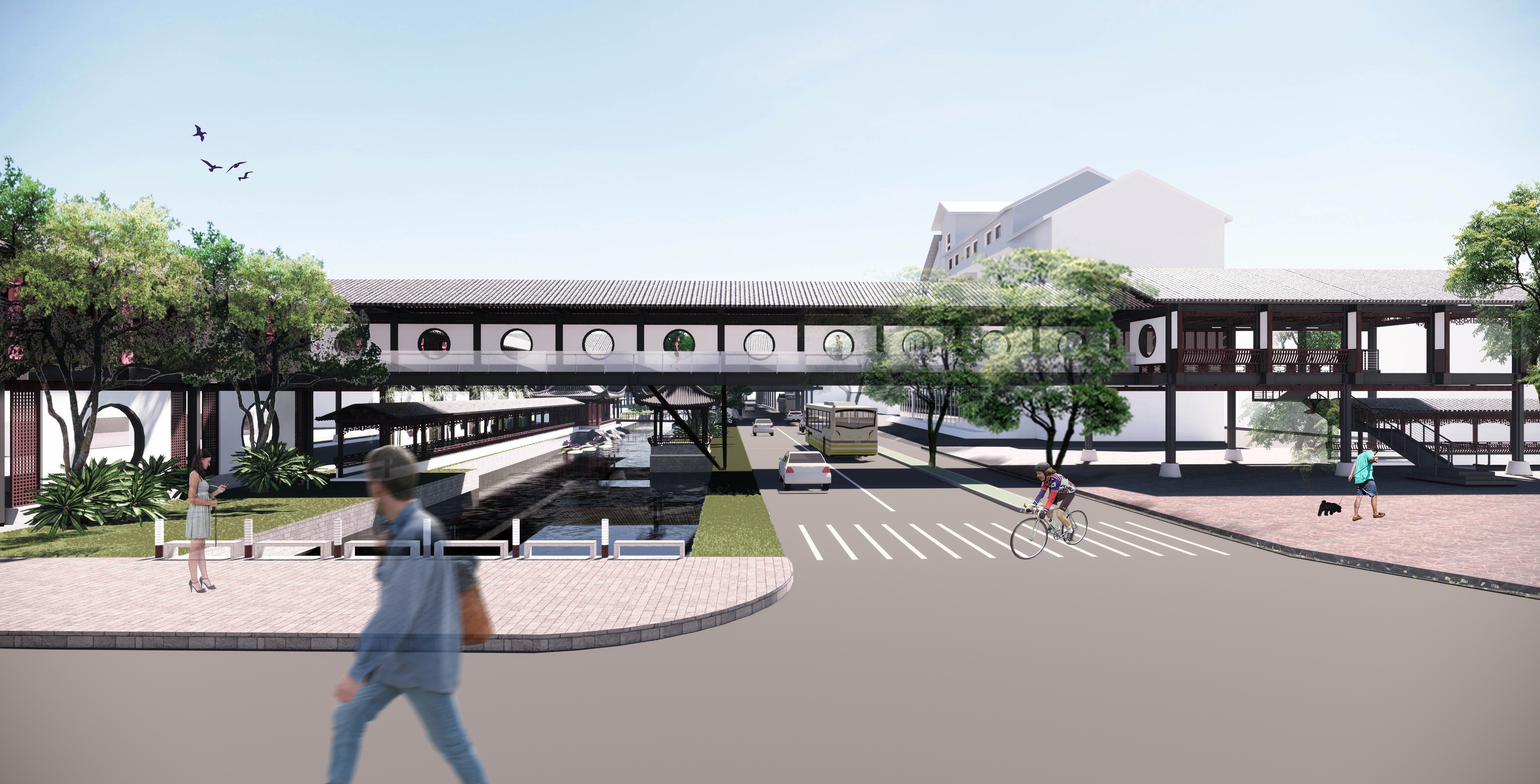
A pedestrian-focused streetscape that integrates water, landscape, and elevated circulation to soften traffic impact and restore human-scale urban continuity.
03
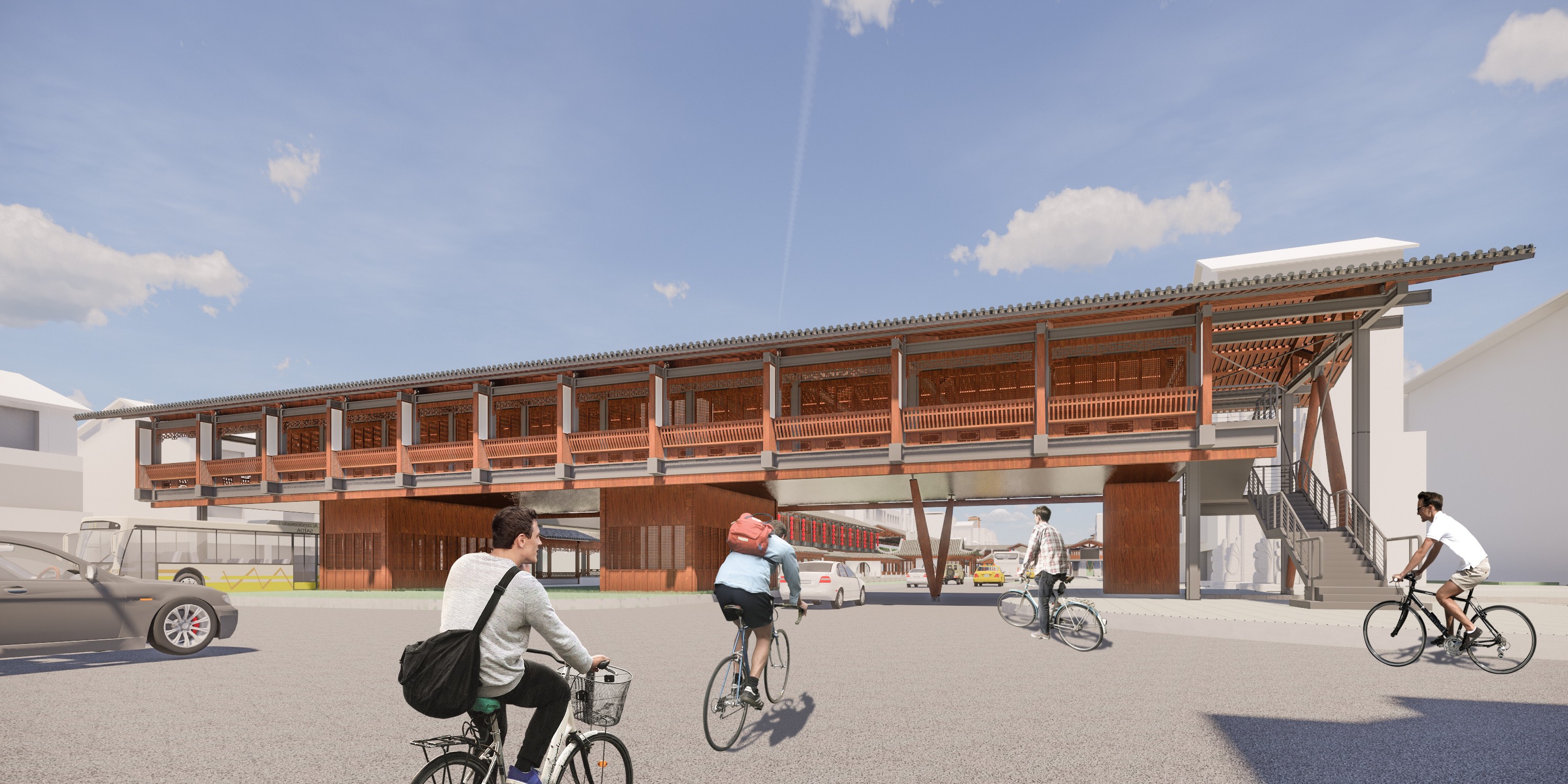
An elevated pedestrian and cycling bridge designed to separate movement layers, reconnect neighborhoods, and resolve traffic conflicts through spatial organization.
+