Semi Autonomous Scooter Dashboard
Designing an intuitive dashboard interface to support safer and more confident urban riding.
00
Problem
As electric scooters become increasingly common in dense urban environments, riders are often required to process traffic conditions, navigation, and system status simultaneously. Existing scooter interfaces are minimal or fragmented, offering limited feedback and placing a heavy cognitive burden on users. This lack of clear communication increases uncertainty, reduces trust in assistive systems, and can compromise safety, especially in crowded or unfamiliar settings.
Solution
This project focuses on designing a human centered dashboard interface that supports rider awareness and decision making without attempting full autonomy. Rather than replacing the rider, the system provides clear visual feedback, adaptive prompts, and simplified controls that help users understand what the scooter is doing and why. The dashboard acts as a mediator between rider intent and system assistance, emphasizing clarity, trust, and ease of use.
The project began with an exploration of how riders perceive information while in motion. Initial research focused on identifying moments of high cognitive load, such as navigating intersections, riding near pedestrians, or responding to sudden obstacles.
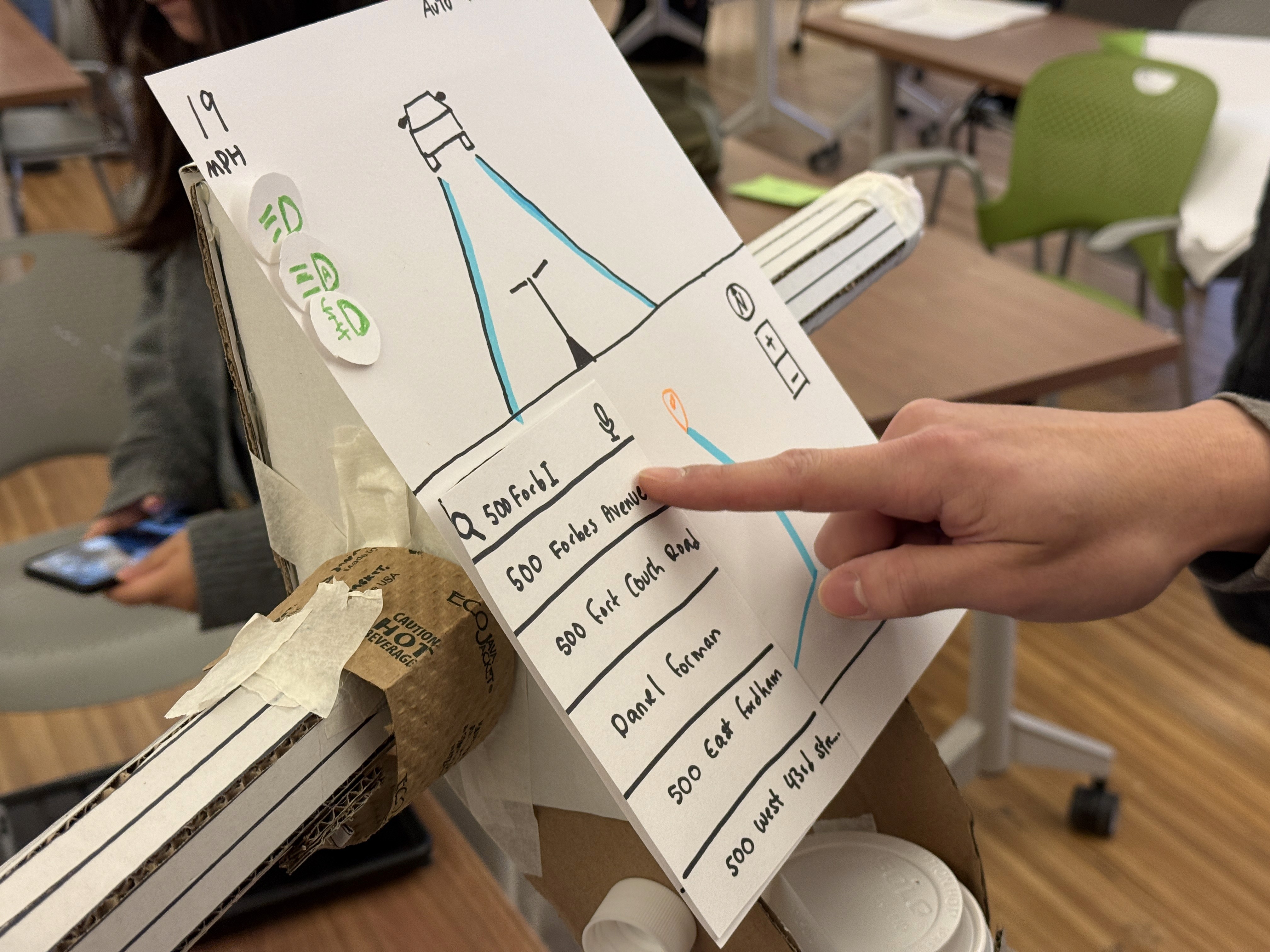
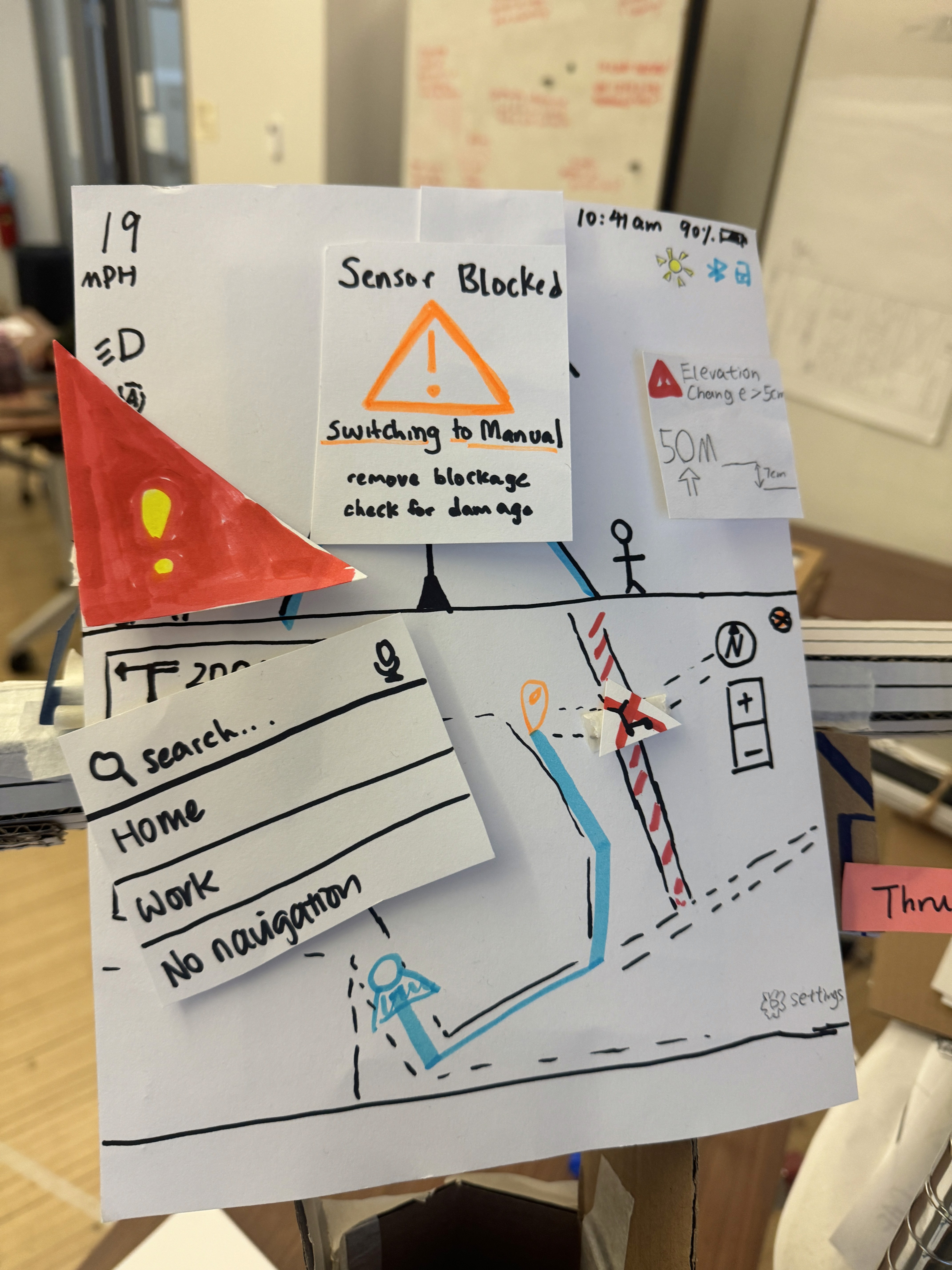
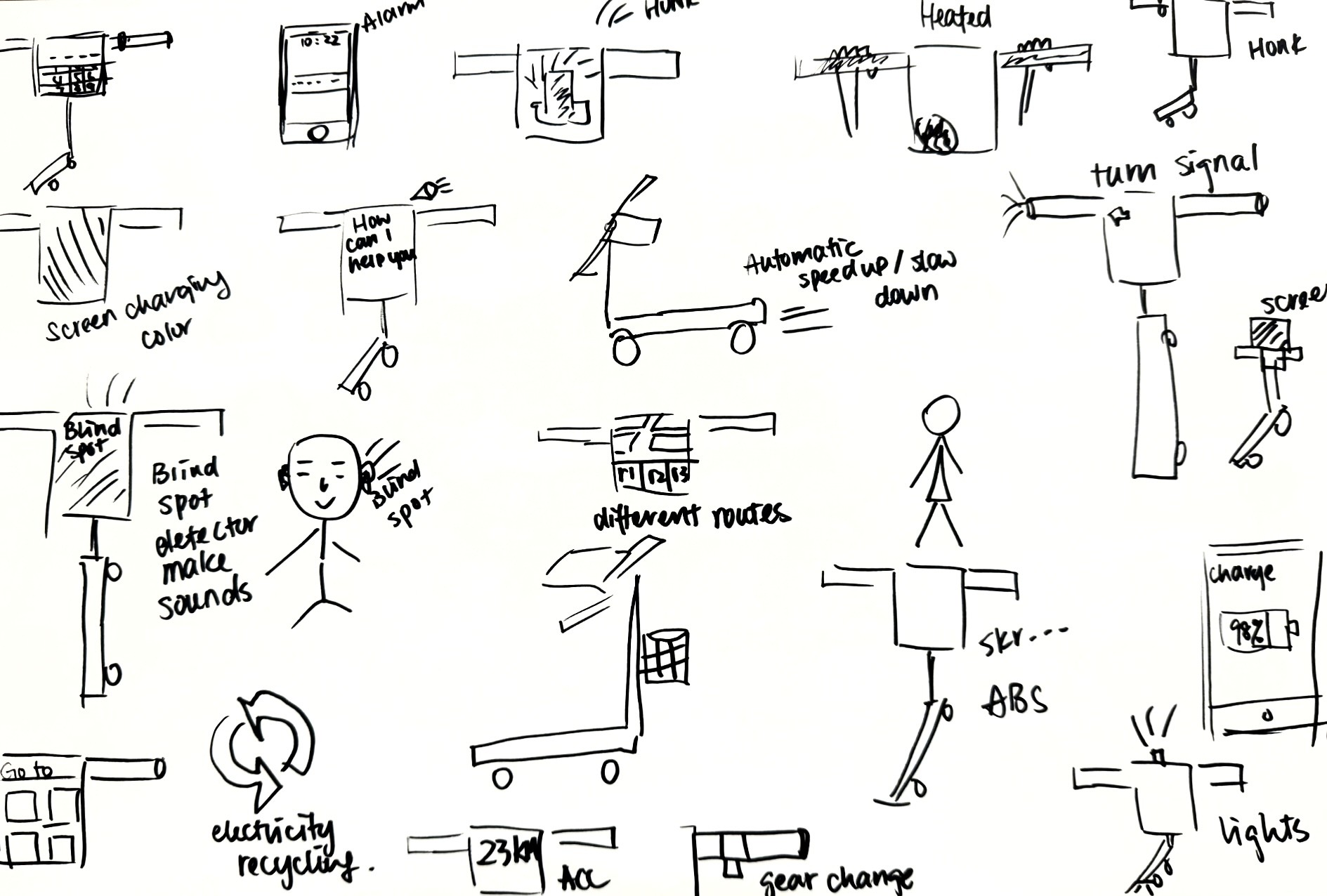
These insights revealed that riders need immediate clarity rather than detailed data, and that interface design must prioritize legibility, timing, and predictability. Low fidelity paper prototypes were used to rapidly test different layouts and information hierarchies. These sketches explored how navigation cues, system status, and assistive feedback could coexist without overwhelming the rider. Early user feedback highlighted the importance of minimizing interaction steps and ensuring that critical information remained visible without requiring focused attention.
Iterative Interface Development
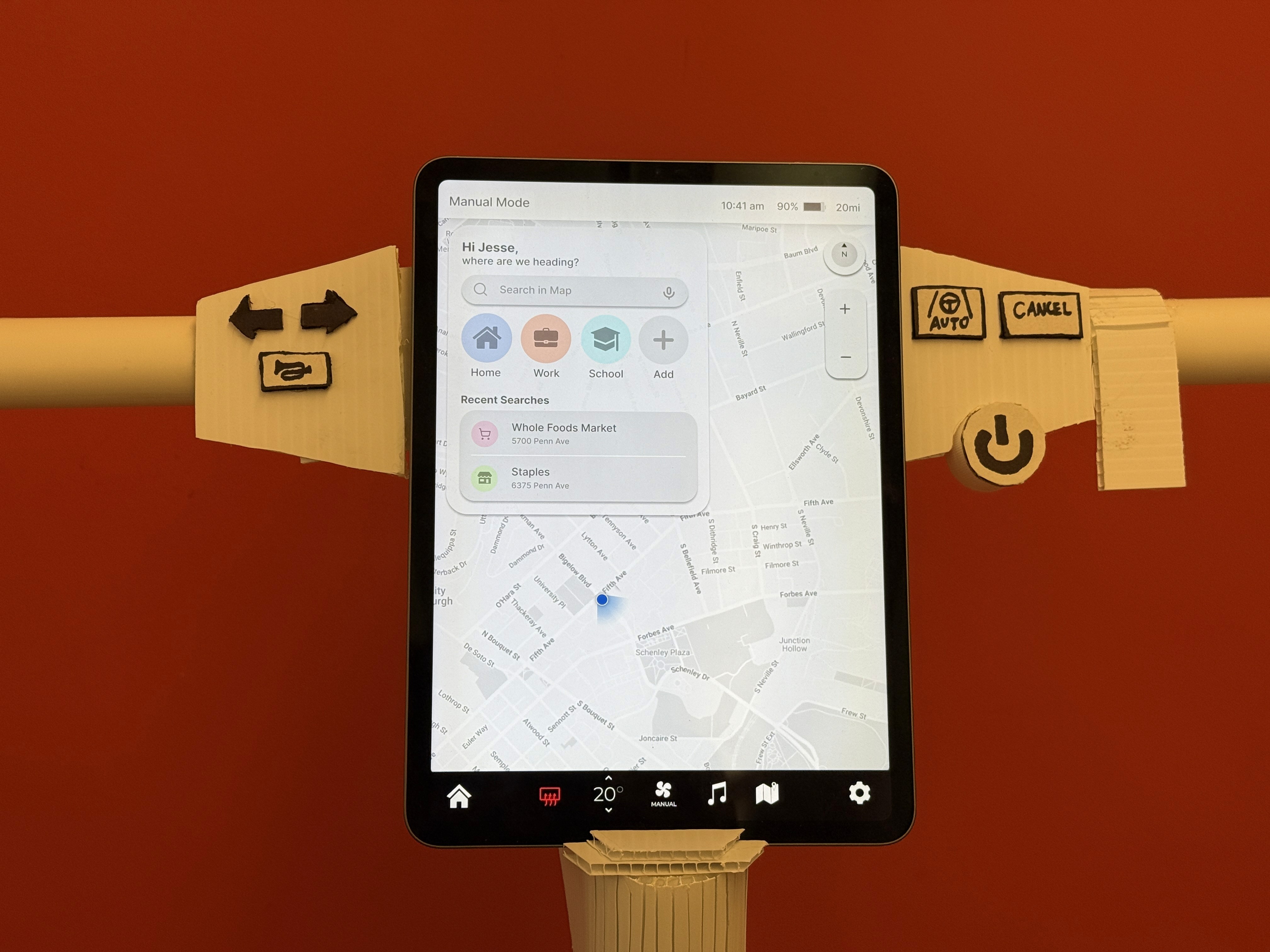
Based on findings from early testing, the interface evolved through multiple iterations, moving from abstract wireframes to structured digital prototypes. Each iteration refined the balance between information density and visual simplicity. Elements that distracted from riding were removed, while key indicators were consolidated into consistent, recognizable patterns.
The digital prototype emphasized continuity across states, allowing riders to anticipate system behavior rather than react to it. Subtle transitions and persistent visual language helped reinforce trust, ensuring that assistive features felt supportive rather than intrusive.
Interaction and Feedback Design
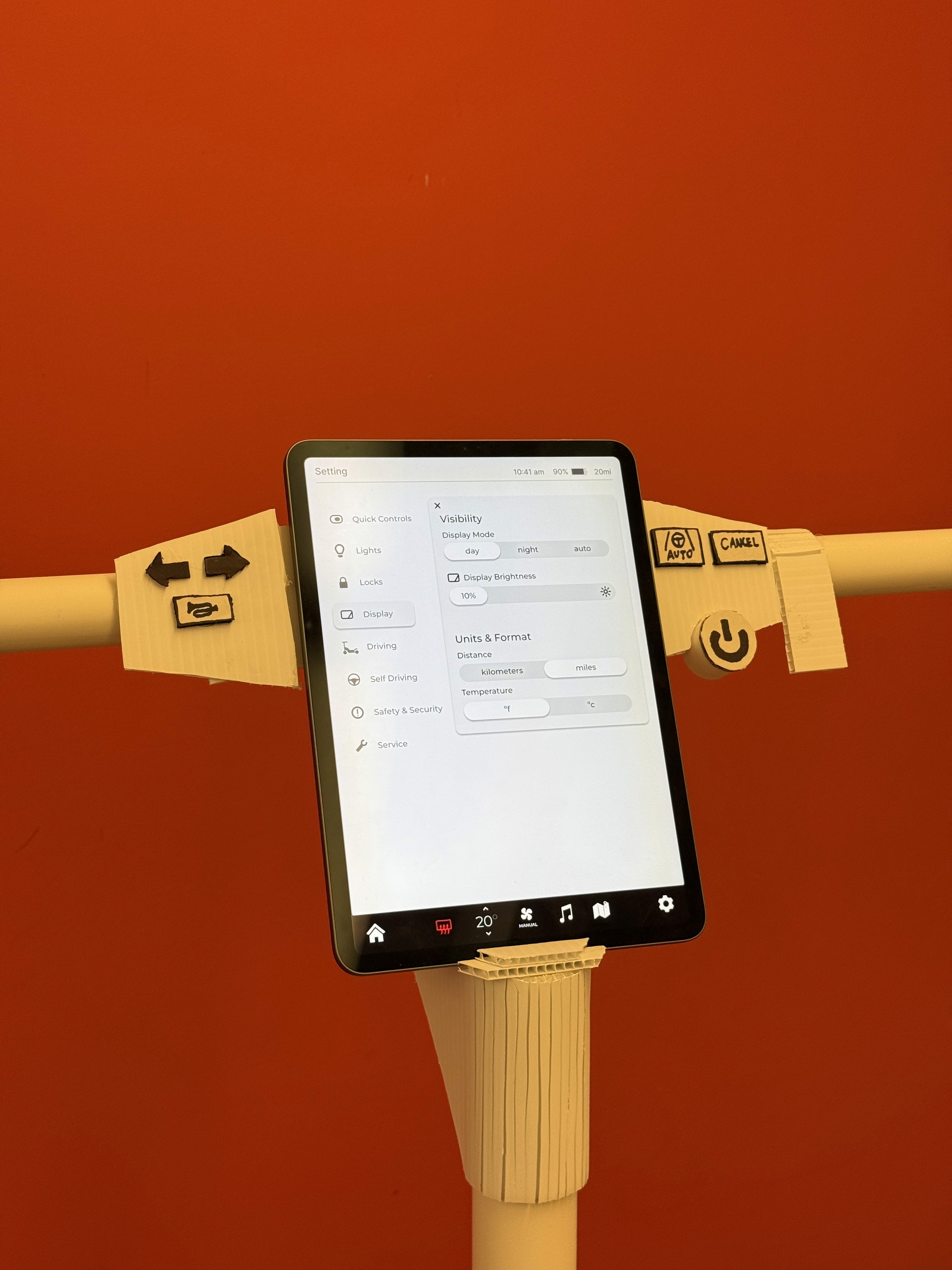
The dashboard design prioritizes intuitive interaction and multimodal feedback. Visual cues such as color shifts, motion indicators, and spatial grouping communicate system states clearly at a glance. Controls are designed to be easily reachable and require minimal effort, reducing distraction during riding.
Rather than asserting control, the interface focuses on transparency. By clearly signaling when assistance is active and how the scooter is responding, the design helps riders maintain a sense of agency. This approach supports both novice and experienced users, adapting to different comfort levels without altering the core interaction model.
Outcome and Reflection
The final digital prototype demonstrates how UI and UX design can meaningfully enhance safety and confidence in personal mobility without relying on full self driving capabilities. The project highlights the importance of trust, legibility, and timing in human machine interaction, particularly in dynamic urban contexts.
By grounding assistive behavior in clear communication rather than automation, the dashboard offers a rider centered vision for semi autonomous mobility. The project reflects a broader interest in designing interfaces that support human decision making, especially in environments where attention and perception are constantly in flux.
01
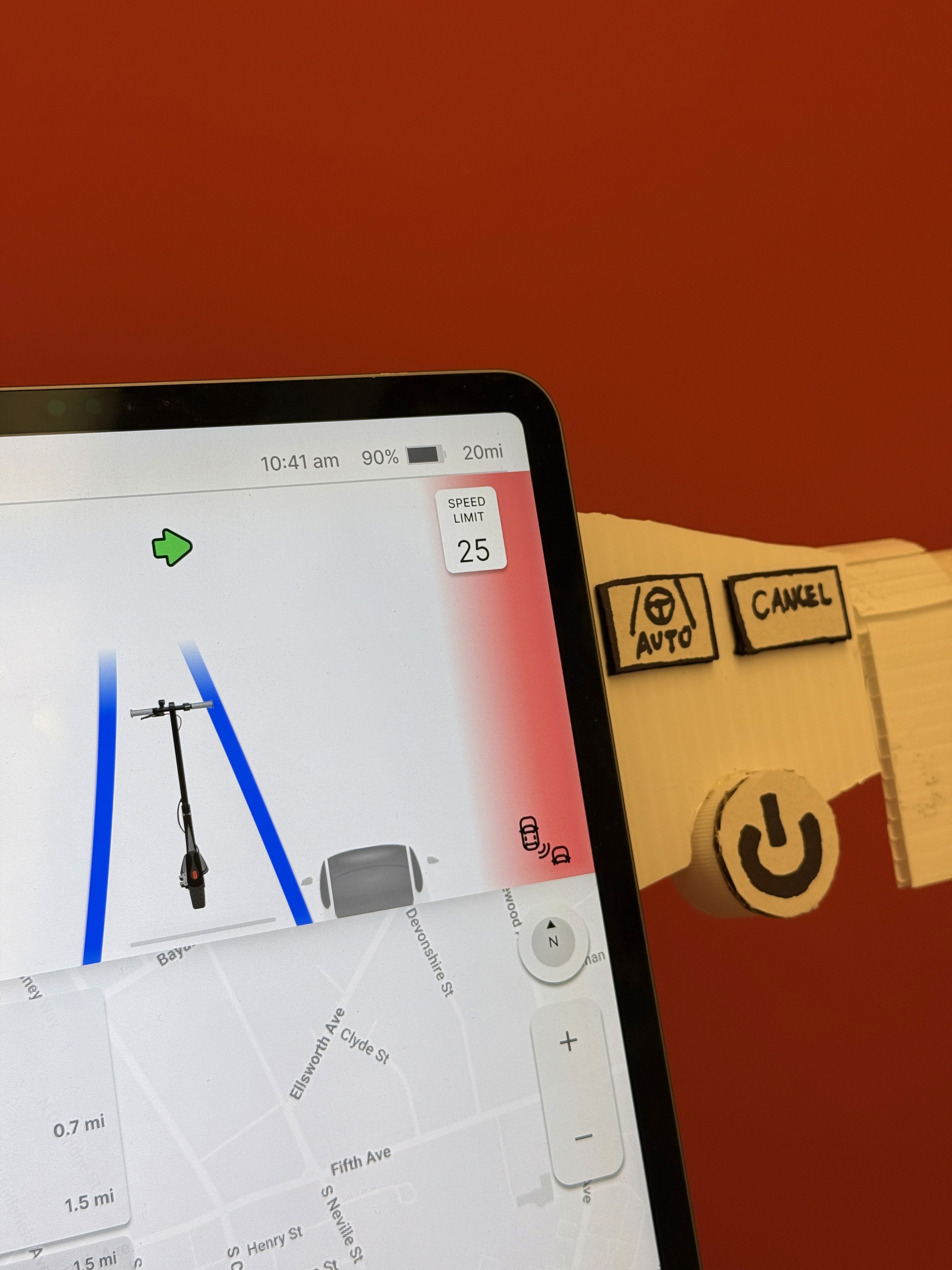
Close-up of the dashboard interface showing lane guidance and blindspot alerts, exploring how critical riding information can be communicated clearly at a glance during motion.
02
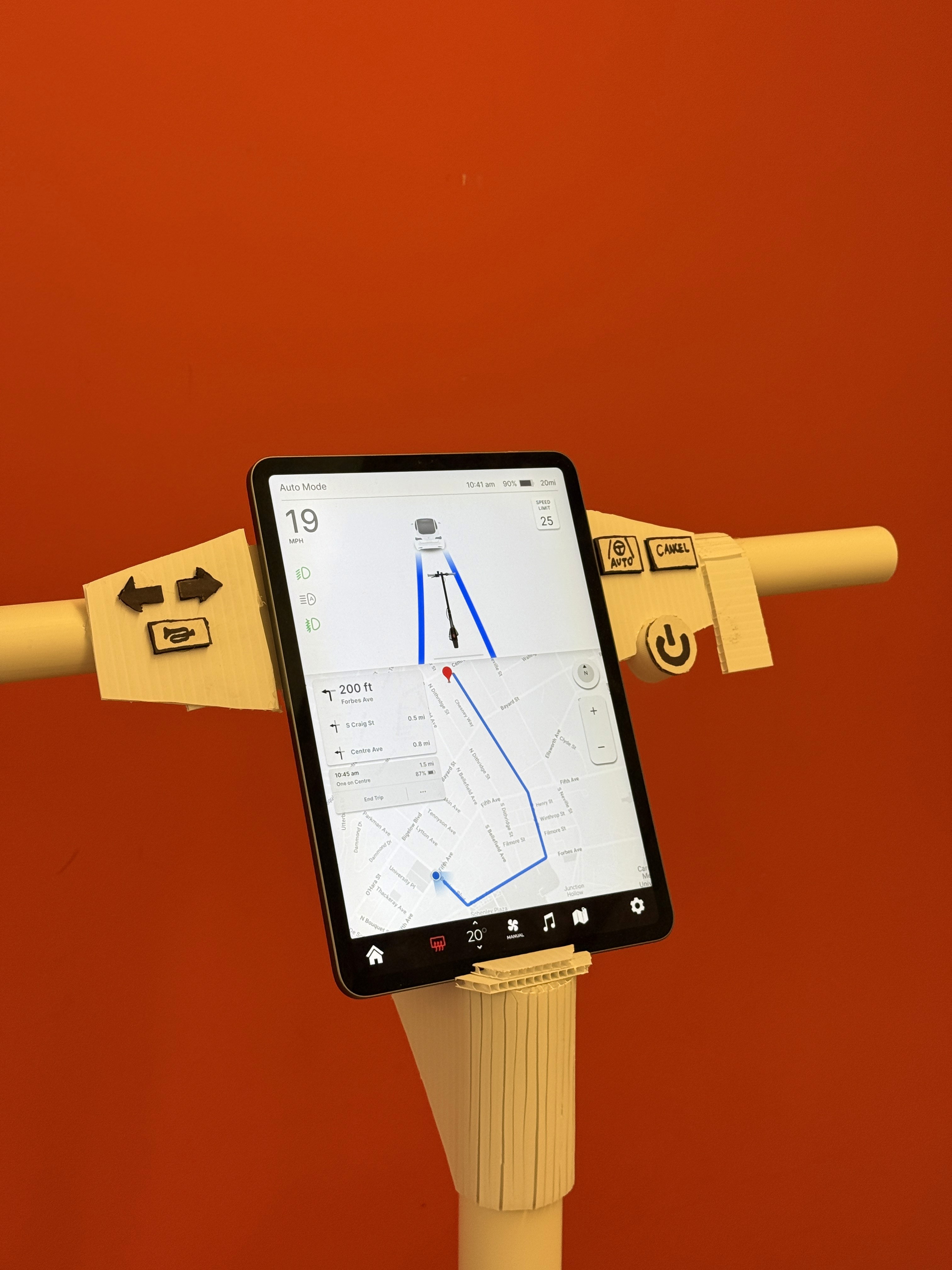
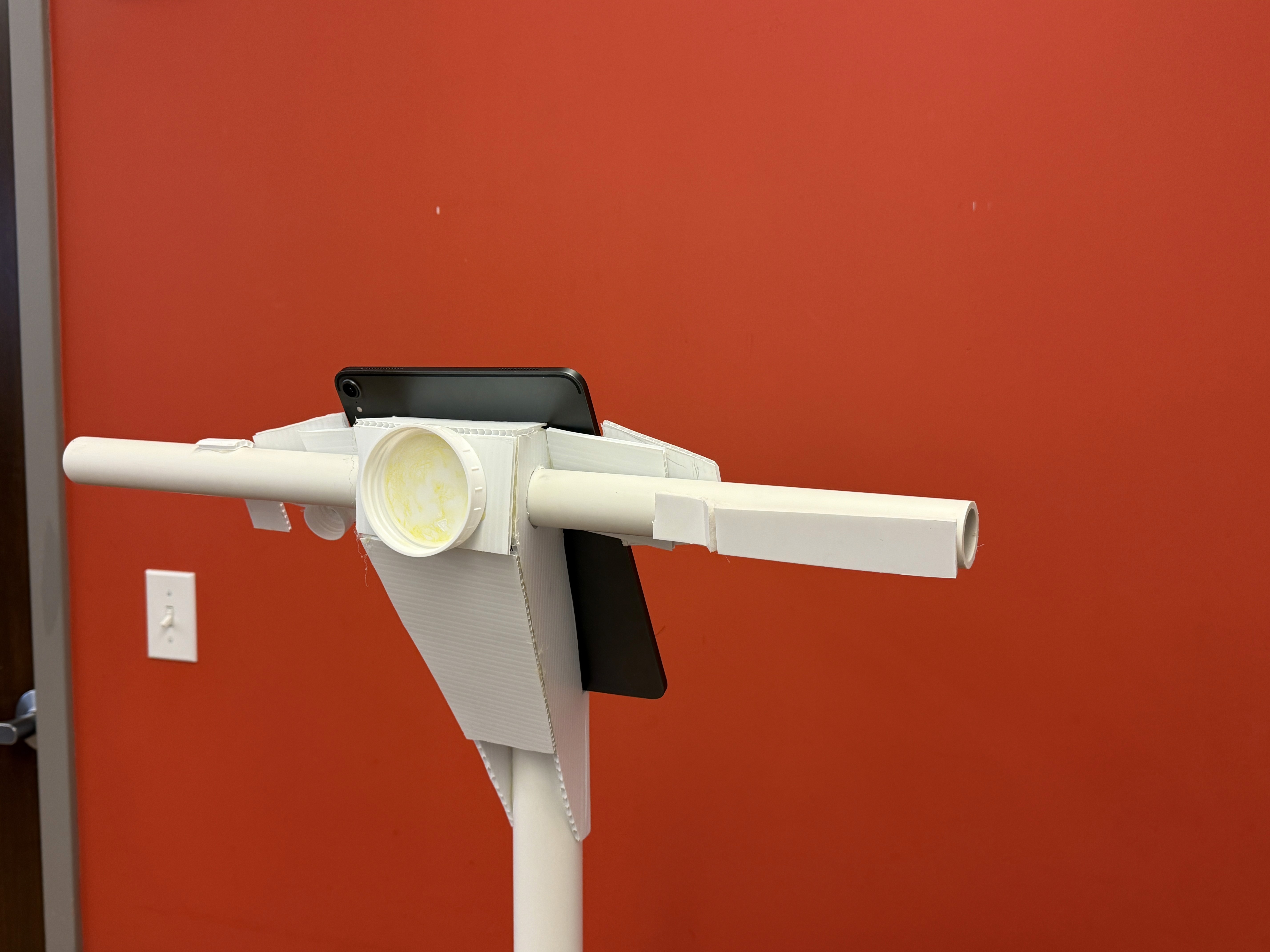
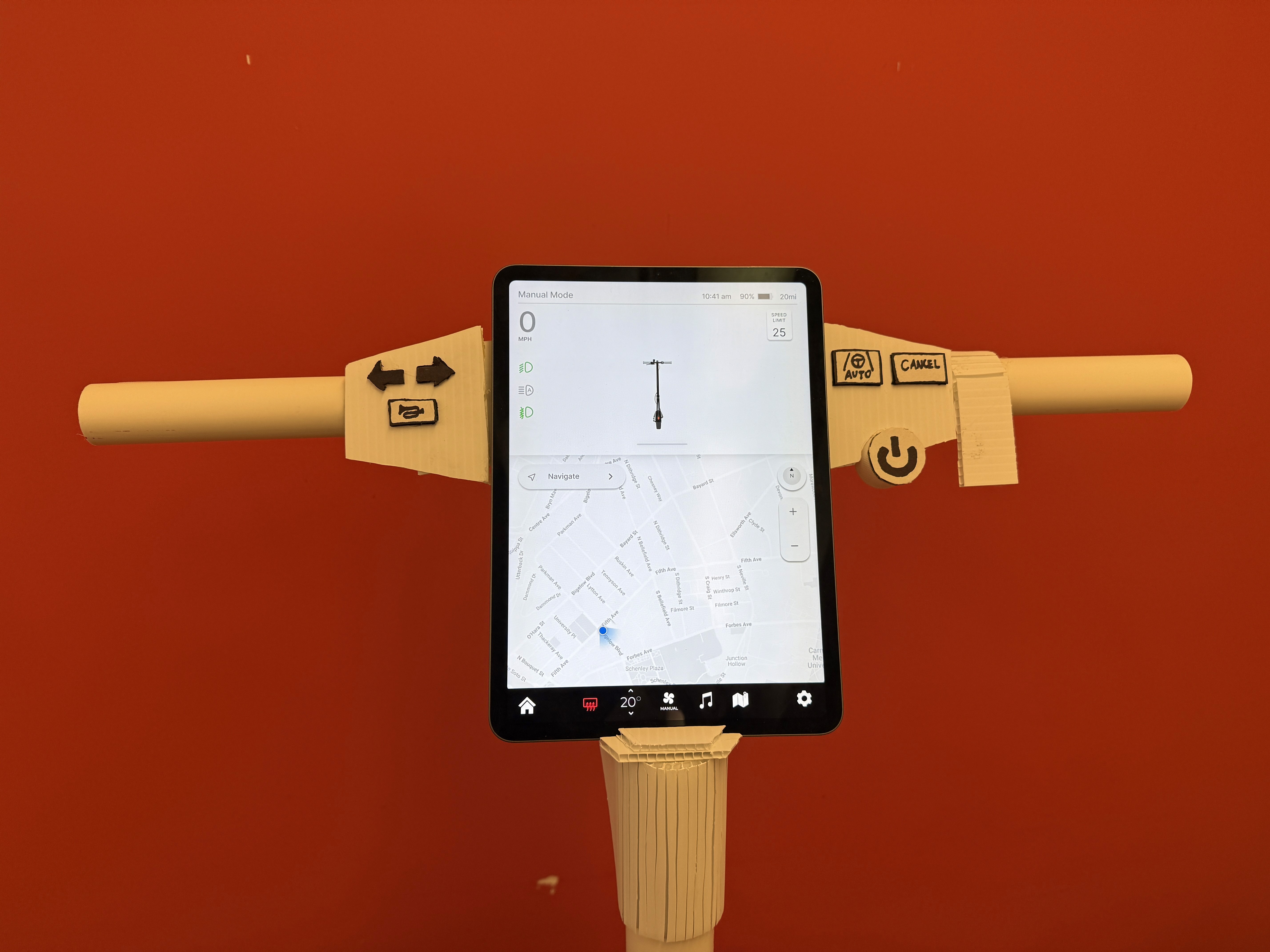
Physical prototype combining a tablet-based digital interface with cardboard controls to test layout, reach, and interaction flow in a realistic riding posture.
03
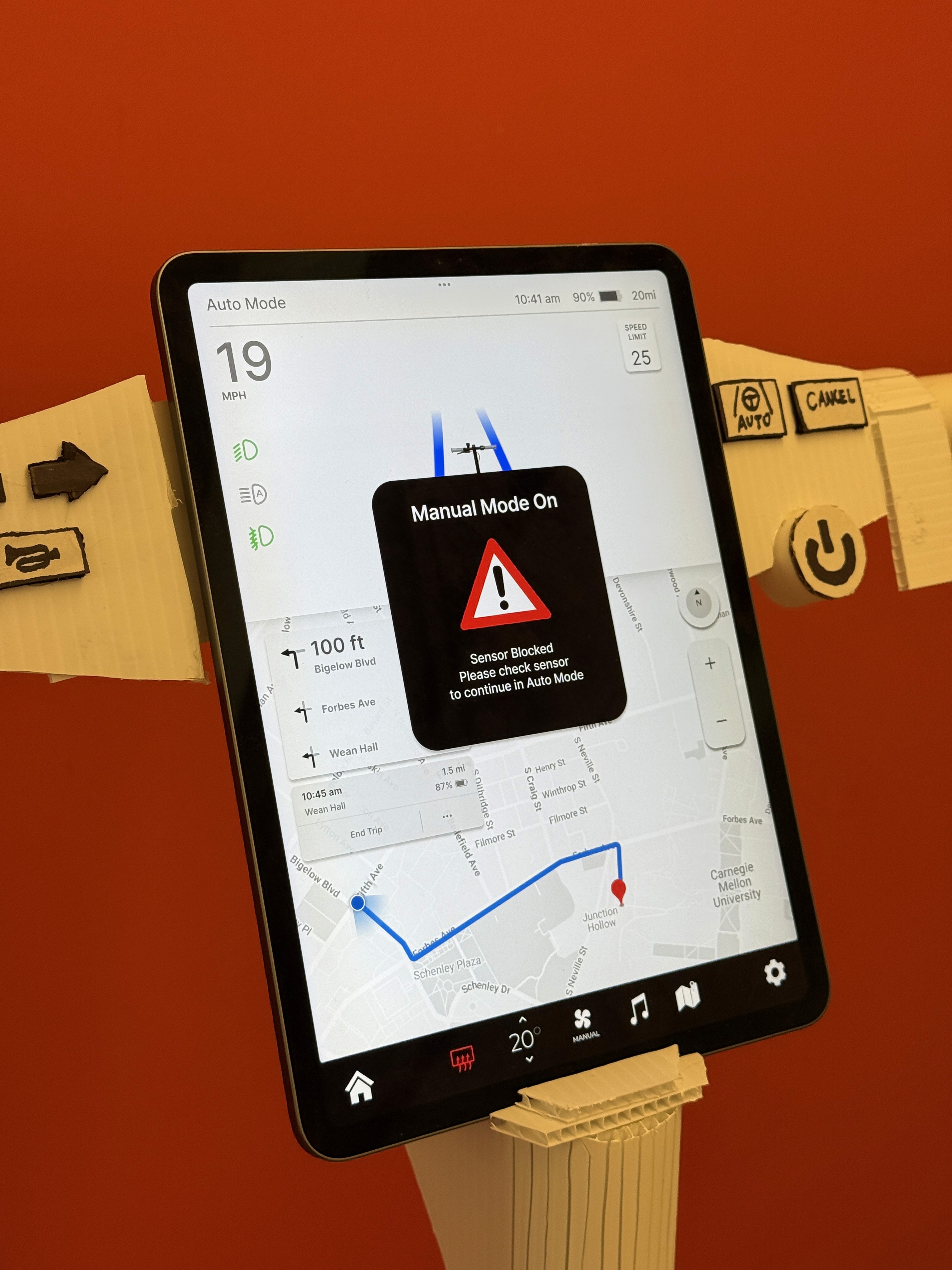
Interface state illustrating a transition from assisted to manual control, emphasizing transparency and trust through clear warnings and immediate user feedback.
+