PS4 — Molding
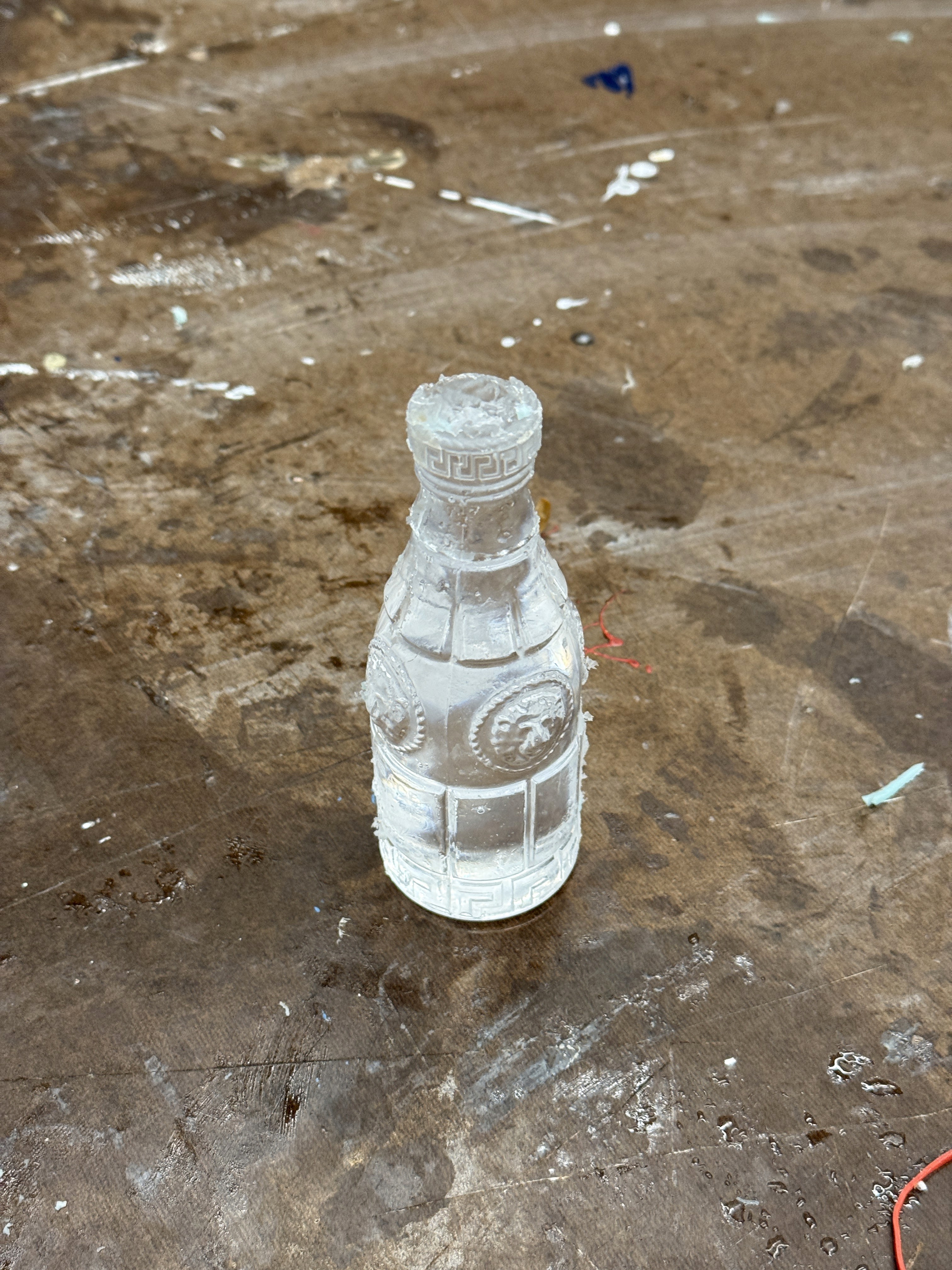
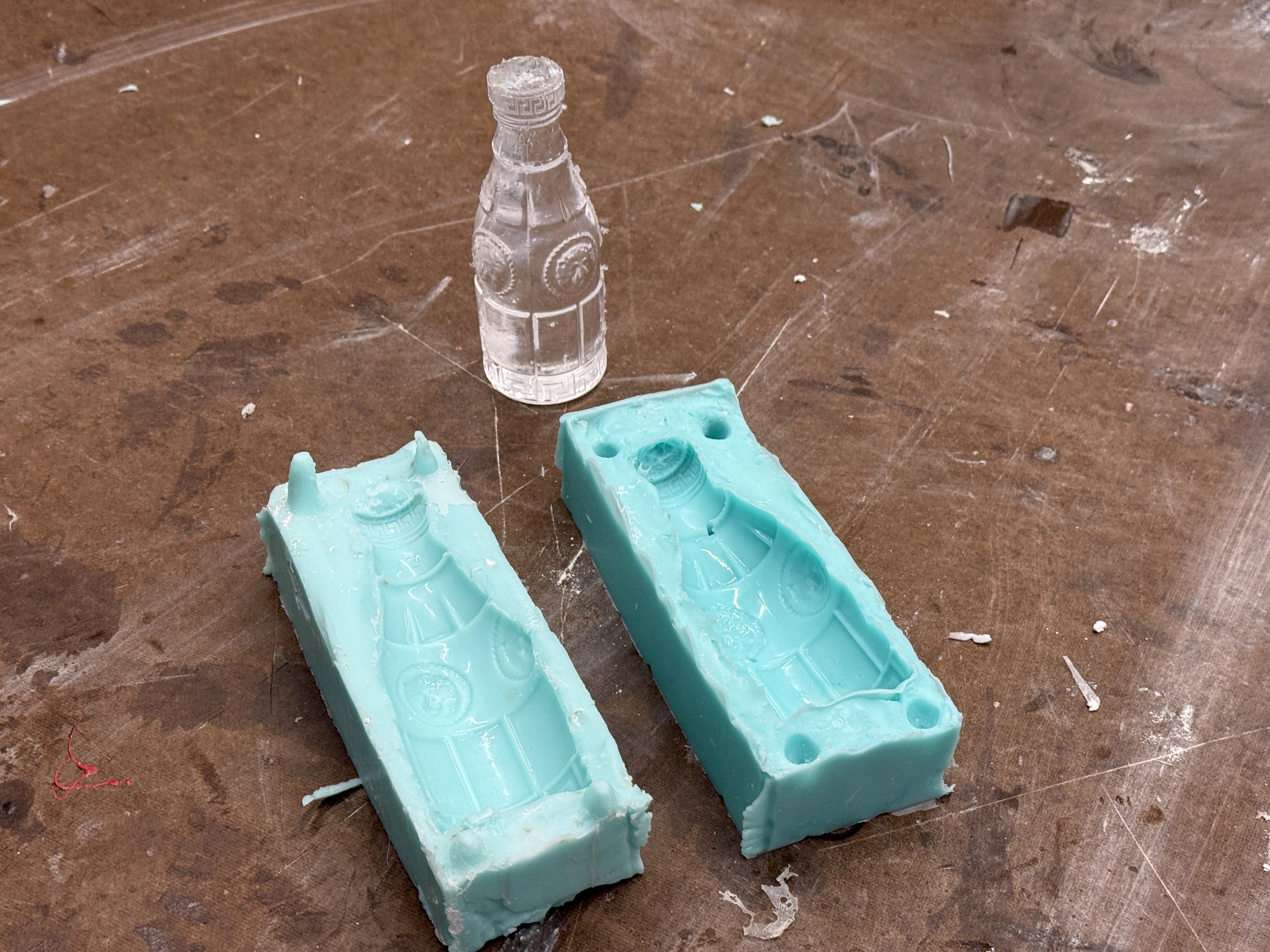
A resin-cast replica of a perfume bottle created through a multi-part silicone mold to explore precision molding and material reproduction.
00
Problem
Traditional prototyping methods often struggle to accurately replicate complex geometries and fine surface details. The challenge was to design and fabricate a mold that can capture intricate features of an existing object and successfully reproduce it using resin casting under strict material constraints.
Solution
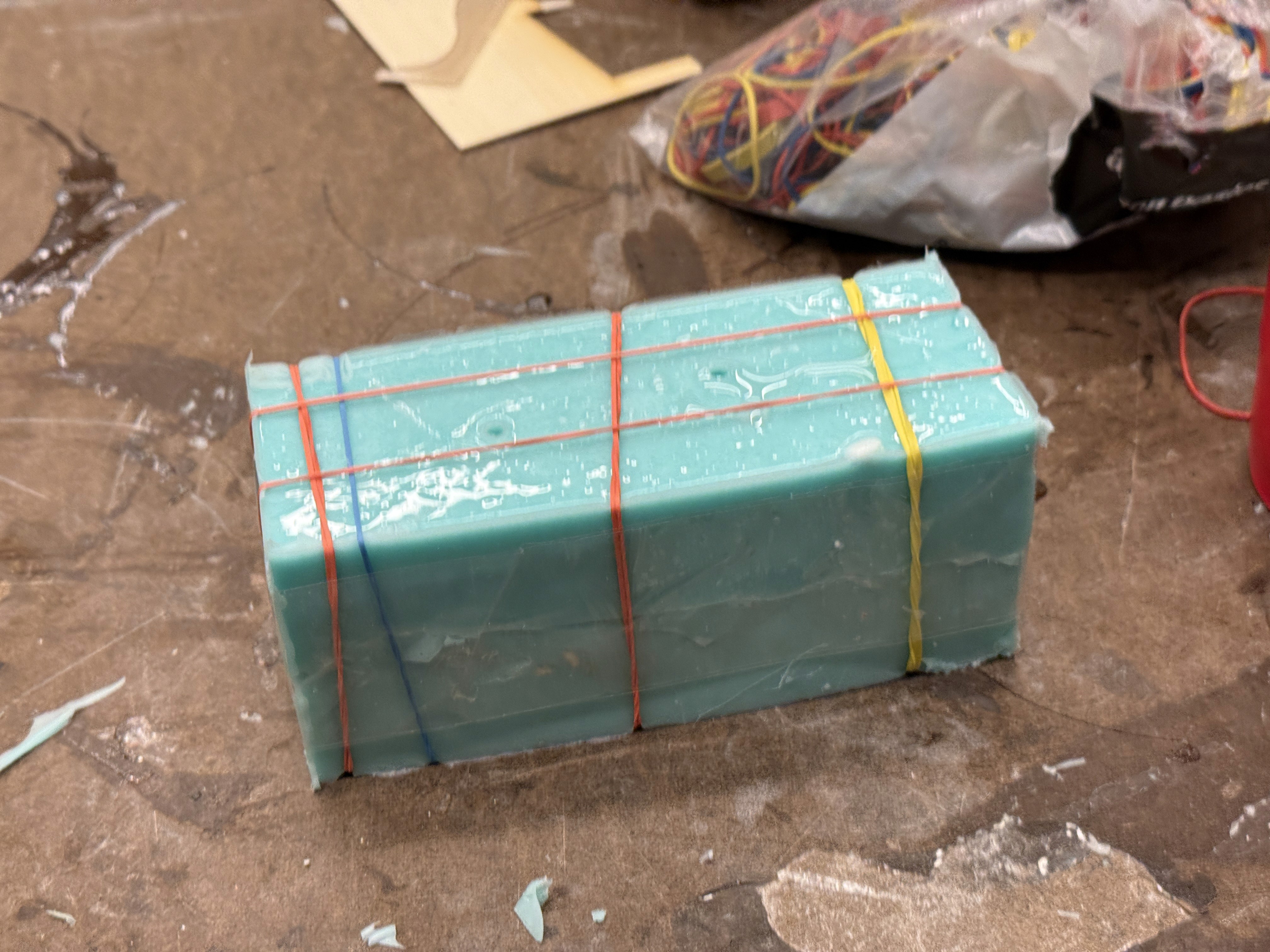
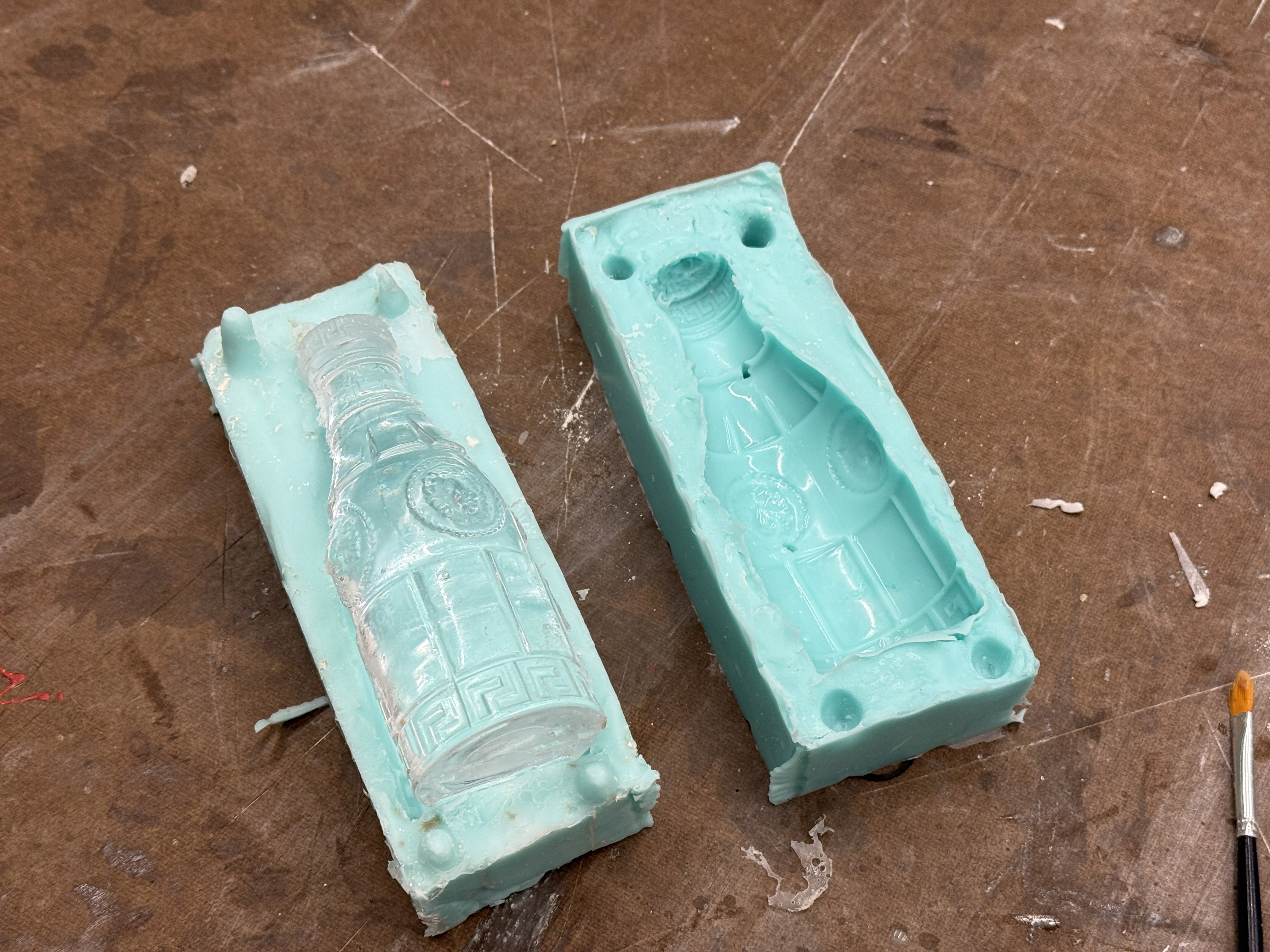
The final approach uses a multi-part silicone mold to capture the detailed geometry of a perfume bottle, allowing resin to be cast into a precise replica. By carefully designing parting lines and ensuring proper material flow, the mold enables accurate reproduction while maintaining structural integrity during demolding.
This project focuses on mold making as an alternative prototyping method for replicating complex objects. The selected object, a perfume bottle, features detailed surface patterns and varying geometry, making it a suitable candidate for testing the accuracy and capability of silicone molding.
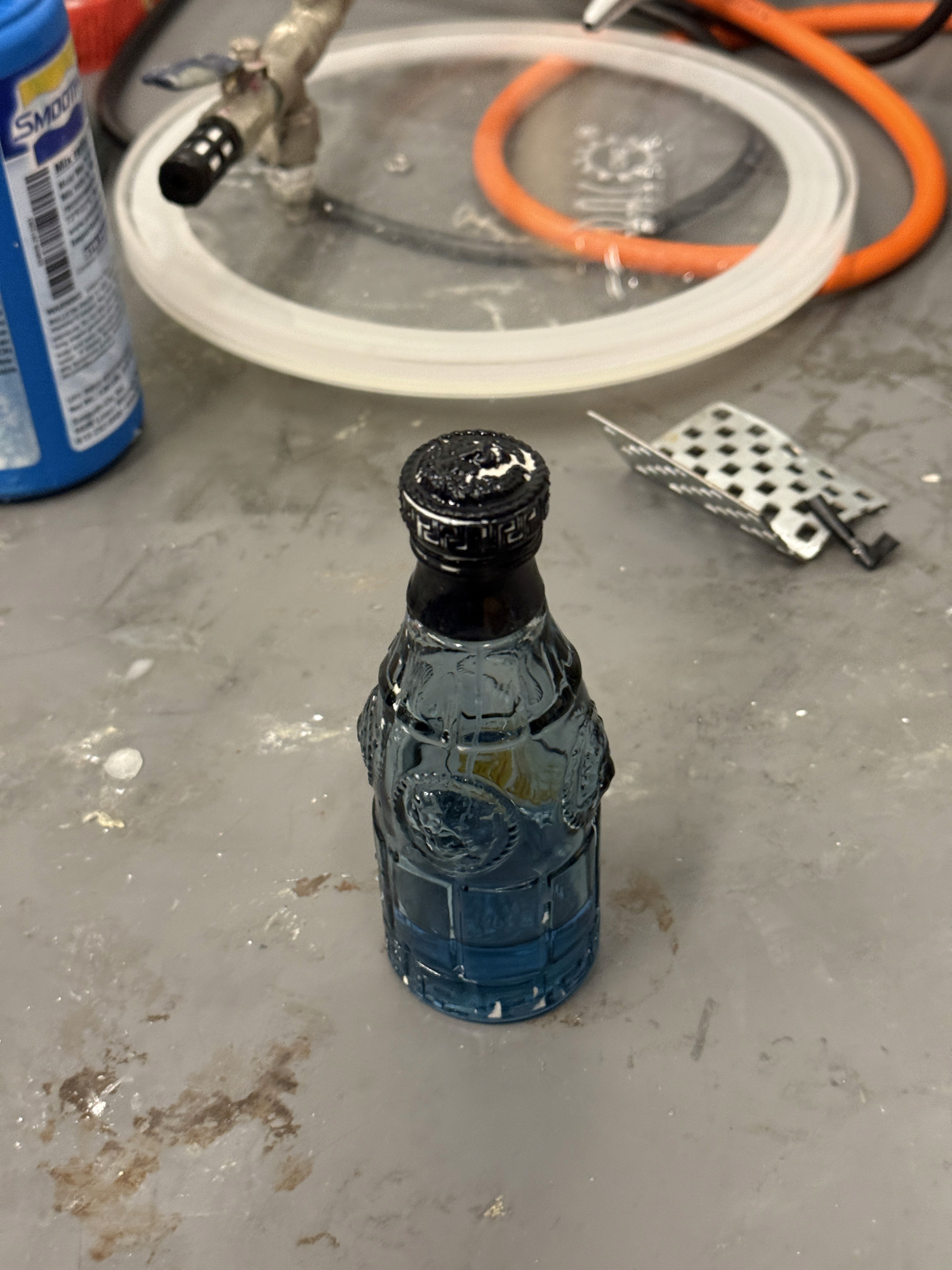
The design process began with analyzing the geometry of the bottle to determine an effective mold strategy. Key considerations included identifying appropriate parting lines, minimizing undercuts, and ensuring that the mold could be separated without damaging the final cast. Multiple mold configurations were explored before selecting a multi-part approach to accommodate the bottle’s shape.
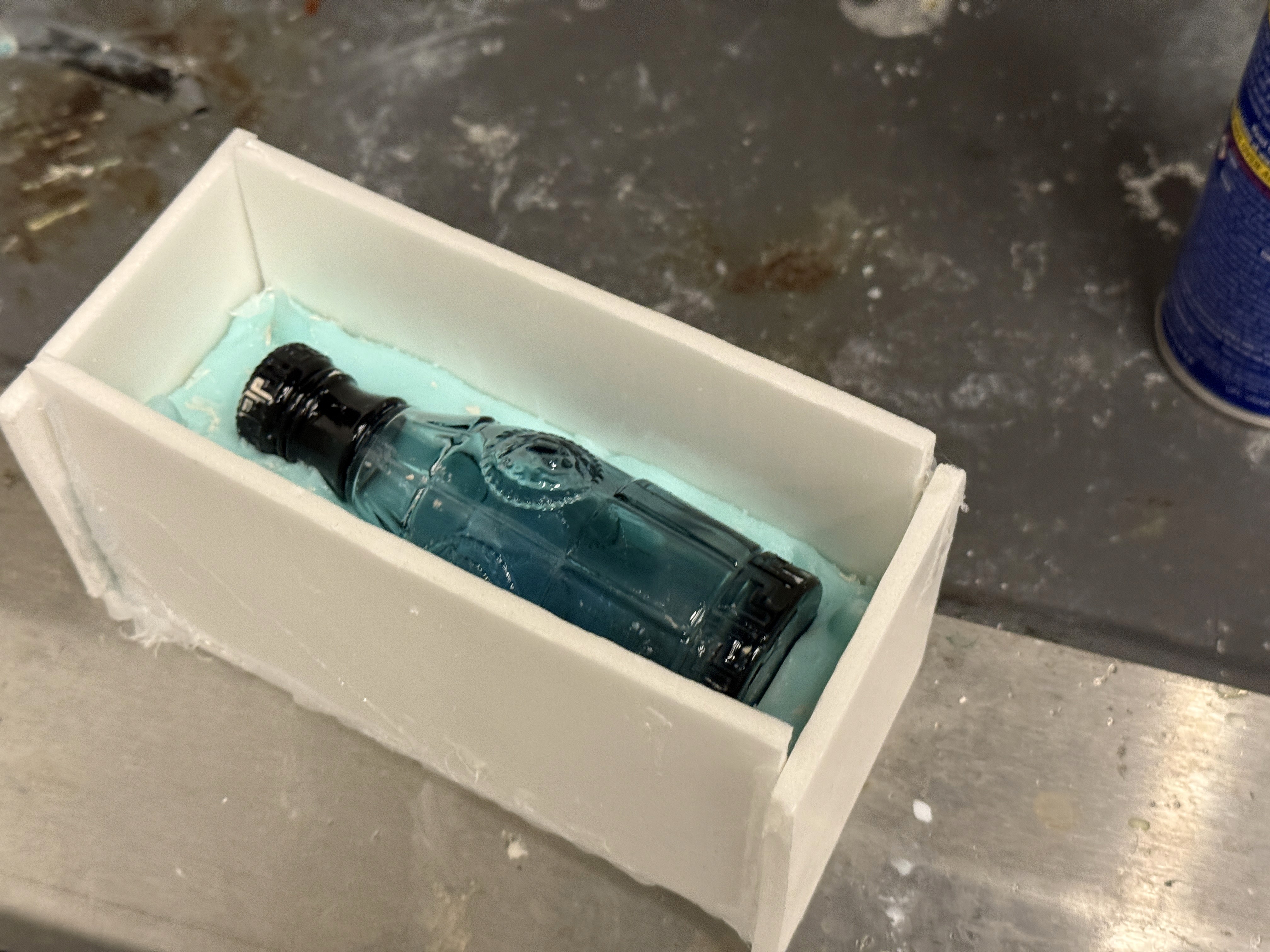
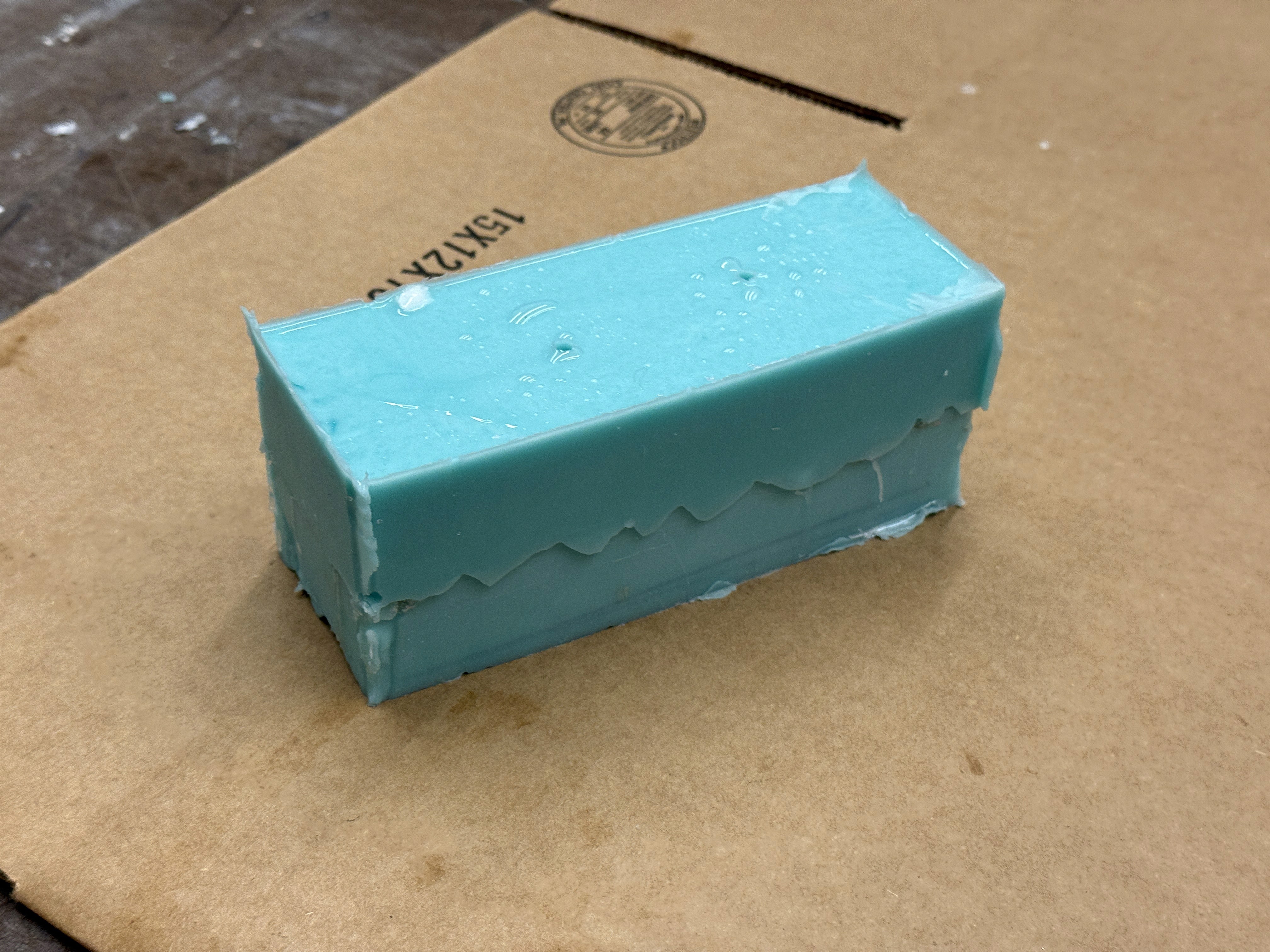
The mold was constructed using silicone, which allows for flexibility and fine detail capture. Careful preparation was required, including sealing the mold box, positioning the original object, and ensuring sufficient material thickness around all surfaces. Attention was also given to preventing air bubbles and ensuring proper curing.
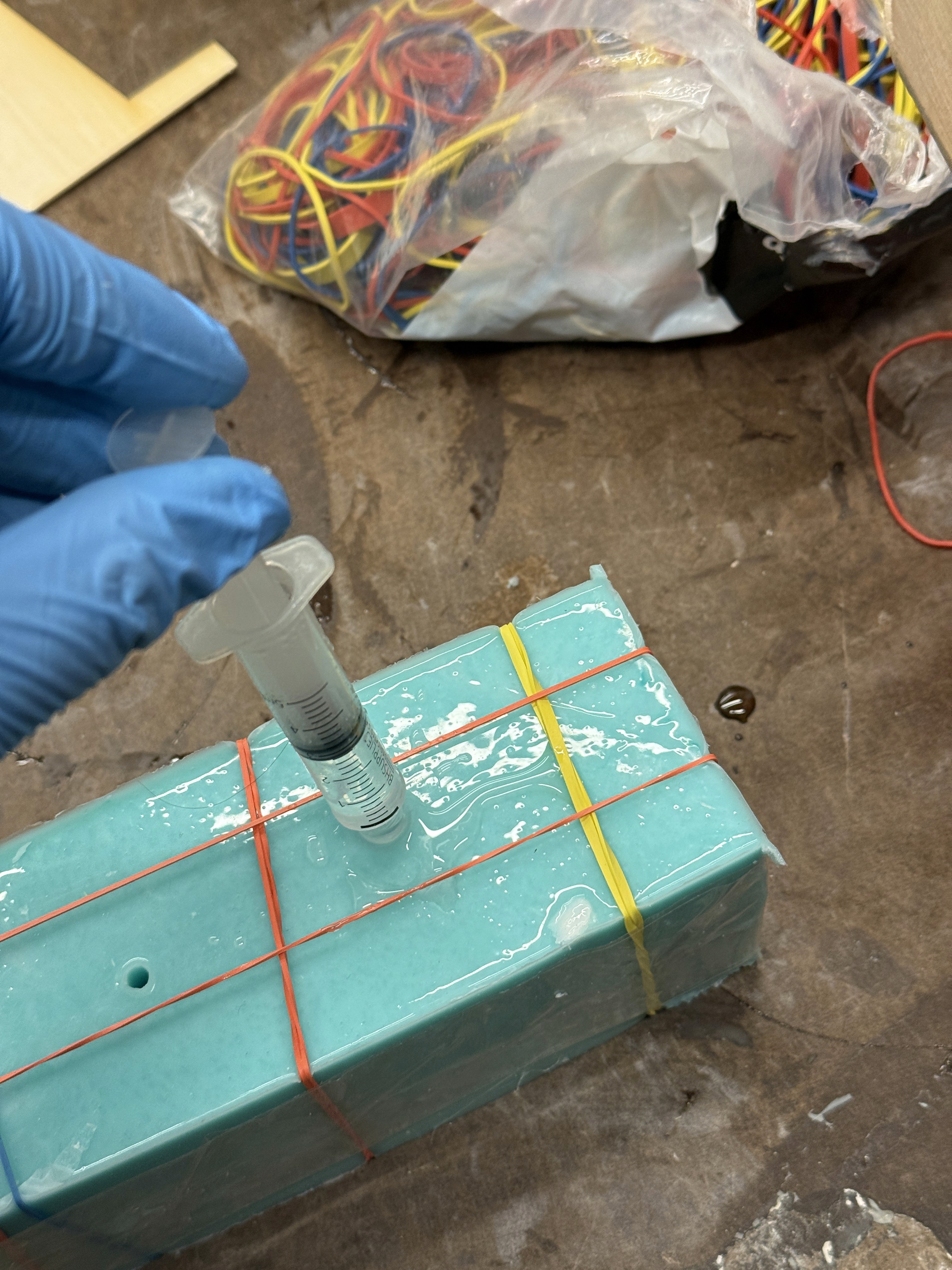
Once the mold was completed, resin was poured to create the final cast. The casting process required controlled pouring and curing to preserve surface quality and structural consistency. After demolding, the final object successfully retained the intricate details of the original perfume bottle, including its embossed patterns and overall form.
The final outcome demonstrates the effectiveness of mold making for reproducing complex geometries with high fidelity. It highlights the importance of planning, precision, and material understanding in achieving accurate and repeatable results.
This project shows how inclusive design and mechanical engineering can come together to remove barriers to creative work. By automating an overlooked yet essential task, the self-leveling tripod empowers more people to engage in photography and content creation with comfort, efficiency, and independence.
01
02
03